

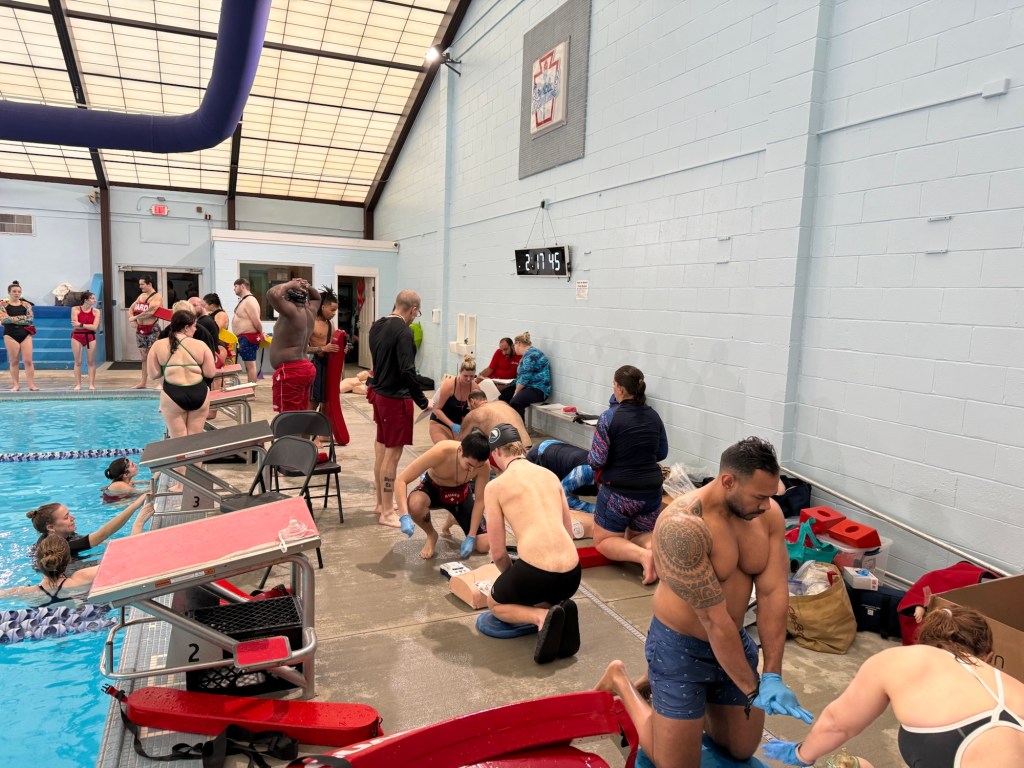
When it comes to CPR training, realism matters. In medical or care facilities, it’s common to practice on beds or elevated surfaces because that’s where many emergencies happen. However, limiting training to these scenarios overlooks a critical truth: emergencies are unpredictable. That’s why every CPR class—whether it’s for healthcare providers, first responders, or general staff—should include hands-on practice of CPR on the ground.
Real-World Emergencies Don’t Happen in Controlled Settings
In a perfect world, every cardiac arrest would occur in a fully equipped room, with ample staff, an adjustable hospital bed, and all the tools needed at arm’s reach. But in reality, patients collapse in hallways, bathrooms, stairwells, parking lots, or in their own homes. Even within a medical facility, responders often need to act quickly before a patient can be safely transferred to a bed.
Practicing CPR on the ground prepares participants for these unpredictable, uncontrolled scenarios. It builds confidence in positioning, airway management, and compression technique when there’s no elevation or support under the patient. It also helps responders experience the physical demands of kneeling and sustaining compressions in a more realistic setting.
Improved Compression Quality
High-quality compressions are the foundation of effective CPR. Studies show that surface firmness significantly affects compression depth and recoil. Beds—especially hospital beds with mattresses—can absorb force and reduce the effectiveness of compressions unless a backboard is used. Practicing on the floor ensures participants get a feel for proper depth, rhythm, and body mechanics without these variables.
Builds True Readiness
Training on a bed alone can create a false sense of security. It assumes a patient is always neatly positioned and accessible. Practicing on the floor trains participants to adapt—to quickly assess space, reposition a patient, and start CPR without hesitation. This kind of readiness can be the difference between hesitation and immediate action in a life-threatening situation.
Encourages Teamwork and Safe Movement
Learning how to move a patient safely from a bed to the floor (or vice versa) is a valuable skill in itself. Ground-based training encourages communication and planning, teaching participants to work as a team under pressure. It also highlights potential barriers—tight corners, limited space, or mobility issues—that teams can troubleshoot in advance during drills.
The Bottom Line
CPR training should reflect reality. Even in a fully equipped facility with hospital beds, incorporating ground-based CPR practice is essential. It improves confidence, technique, and readiness for the moments that truly count.
At Certifications For Life Inc., we ensure every participant learns to perform CPR on the ground because when emergencies strike, there’s no time to adjust. There’s only time to act.
#CPRTraining #RealLifeReadiness #EmergencyPreparedness #CPRSavesLives #HandsOnlyCPR #MedicalTraining #OnTheGroundCPR #LifesavingSkills #HealthcareEducation #FirstResponderTraining #CertificationsForLife #TrainForReality
 Certifications For Life Inc.