


If you’re a new American Heart Association (AHA) instructor, or considering transferring your alignment, one of your first questions may be, “How much are your cards?”
It’s a reasonable question. Costs matter when you’re running a business. But the price of an eCard is only one part of the relationship. You’ll also want to know who answers your questions, what support is available, what you’re agreeing to, and how problems will be handled.
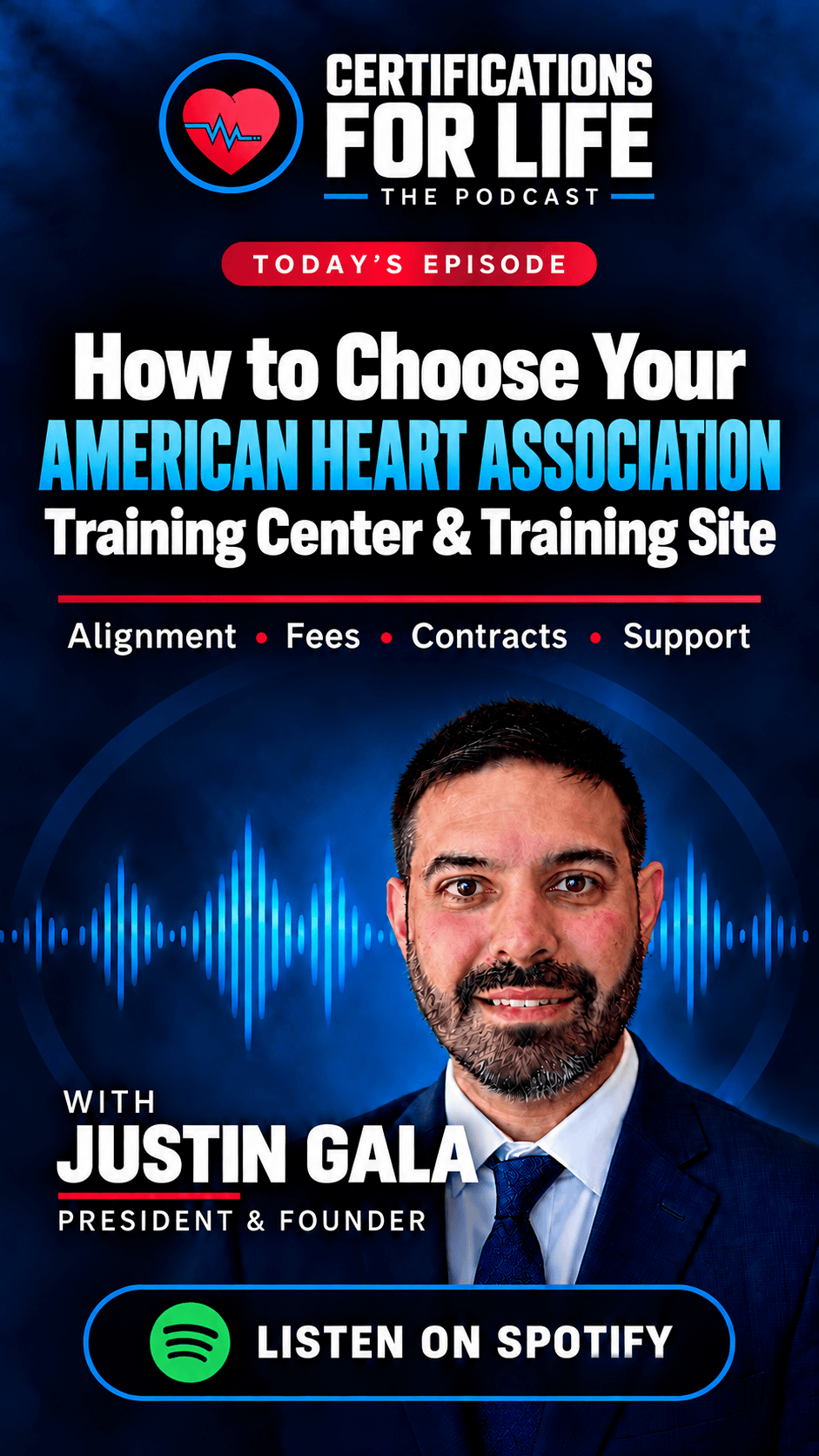
This guide expands on an episode of the Certifications For Life podcast, hosted by Justin Gala, President and Founder of Certifications For Life Inc. It focuses on AHA alignment; other organizations have their own structures and agreements.
Understand what alignment involves
AHA Training Centers are independent businesses operating under agreements with the AHA. The AHA instructor pathway includes alignment with a Training Center or Training Site through Atlas. The AHA’s instructor information page describes the pathway and directs prospective instructors to connect with a Training Center.
That means it’s worth understanding which organization you’re aligning with, who oversees the relationship, and what the organization expects of you. Alignment isn’t just a way to access cards. It can involve administrative processes, quality oversight, and ongoing communication.
Ask what an alignment fee covers
Supporting instructors can take work beyond processing cards. Depending on the organization, a fee may help cover onboarding, paperwork review, record maintenance, administrative systems, answering questions, communicating updates, and quality oversight.
Still, don’t assume a fee includes every kind of assistance. Monitoring, renewal, mentoring, and unlimited business coaching may be separate, or not offered at all. Ask for a written explanation of what the fee covers.
Use questions like these to clarify the full cost:
- Is the fee one-time, annual, or charged at renewal?
- Is it charged per instructor or per business?
- Are there separate fees for monitoring, software, roster processing, or instructor renewal?
- Is the fee charged by the Training Center or Training Site as a business fee, or is it being described as an AHA fee?
If alignment is offered for free, ask the same questions. Understand the services, expectations, and total costs rather than assuming “free” means there are no other charges.

Compare the full cost, not just the eCard price
A lower card price can make a real difference, but the right comparison depends on how much you teach and what other fees apply.
Imagine one center charges a $100 annual alignment fee and offers cards for $5 less than another center. If you purchase 100 comparable cards during the year, you save $500 on cards. After the $100 alignment fee, you’re $400 ahead, before factoring in any other charges.
If you teach only a handful of students, the savings may not outweigh the fee. Run the numbers using your actual teaching volume. Include alignment, cards, processing, systems, monitoring, and renewal costs. Then consider the support you’ll need.
The cheapest option on paper may not be the best fit for your teaching model, or it may be. The point is to compare the whole arrangement, not one price in isolation.
Read the agreement before signing
A written agreement helps clarify each party’s responsibilities. Read it before you sign, and save a copy along with the fee schedule and any policies incorporated into the agreement. A contract deserves careful attention even when you know and like the person offering it.
Review the practical details, including:
- Payment terms and paperwork deadlines
- Equipment and materials expectations
- Monitoring arrangements and how concerns are handled
- Renewal procedures and the agreement’s length
- Whether it renews automatically and how price changes are communicated
- What happens if you want to leave
Also ask how transfers, instructor records, unused card inventory, and outstanding payments are handled if the relationship ends, or if the organization closes. You don’t want to be figuring out those details during a difficult transition.
Pay special attention to any restrictions on your business activities, customer relationships, or ability to work with another organization. If you’re unsure what a provision means or how it may affect you, seek qualified advice. A general conversation with the Training Center is not a substitute for legal guidance.
Find out where each requirement comes from
When someone tells you, “You have to do this,” it’s reasonable to ask: “Is that an AHA requirement, a Training Center policy, or a Training Site policy?”
These are different sources of expectations. Ask for the current policy or a written explanation, then review it for yourself. Knowing where a requirement comes from makes it easier to understand what applies to your teaching and business.
Clear explanations benefit both sides. Instructors need to learn and follow the requirements that apply to their teaching. Organizations supporting instructors should help them locate and understand those expectations.

Evaluate communication and support
Before committing, find out how communication works in practice. Ask who your main contact person is, what their office hours are, what response time is reasonable, and whom to contact if they’re unavailable.
Clarify how course paperwork and eCards are handled, including what happens if a submission is incomplete or needs correction. You don’t necessarily need around-the-clock availability; you do need a dependable process and clear expectations.
Ask what professional support looks like, too:
- Is onboarding provided?
- Are instructors offered feedback?
- How are updates shared?
- Is mentoring available, and does it cost extra?
Be honest about what you need. An experienced instructor who teaches frequently may need a different level of support than someone preparing to teach their first class.
Remember: the relationship goes both ways
Good support depends on both parties doing their part. If you expect timely communication, respond to requests. If you expect organized administration, submit complete paperwork. If you want help improving your instruction, be willing to receive feedback.
It’s also important to understand the scope of alignment support. Help with course administration doesn’t automatically include building your website, setting your prices, finding customers, or managing your business. Ask what assistance is available so neither side has to guess.
Interview, compare, and choose with confidence
Treat the decision like an interview. Ask each Training Center or Training Site about costs, support, communication, oversight, and the agreement. Take notes and compare the answers. Consider how the arrangement fits your teaching volume, experience, and preferred way of working.
Choose a relationship you understand, can afford, and feel comfortable working within, not simply the one with the lowest card price.
At Certifications For Life, Justin Gala wants instructors to ask questions and understand what they’re agreeing to. Clear expectations provide a stronger foundation for working together and delivering quality education. If you’d like to learn more about the company, visit Certifications For Life or contact the team.
Keep learning, reflecting, and growing, and read the agreement before you click “I accept.”


